DAY 40 OF 90 · THE JEREMIAH GENERATION
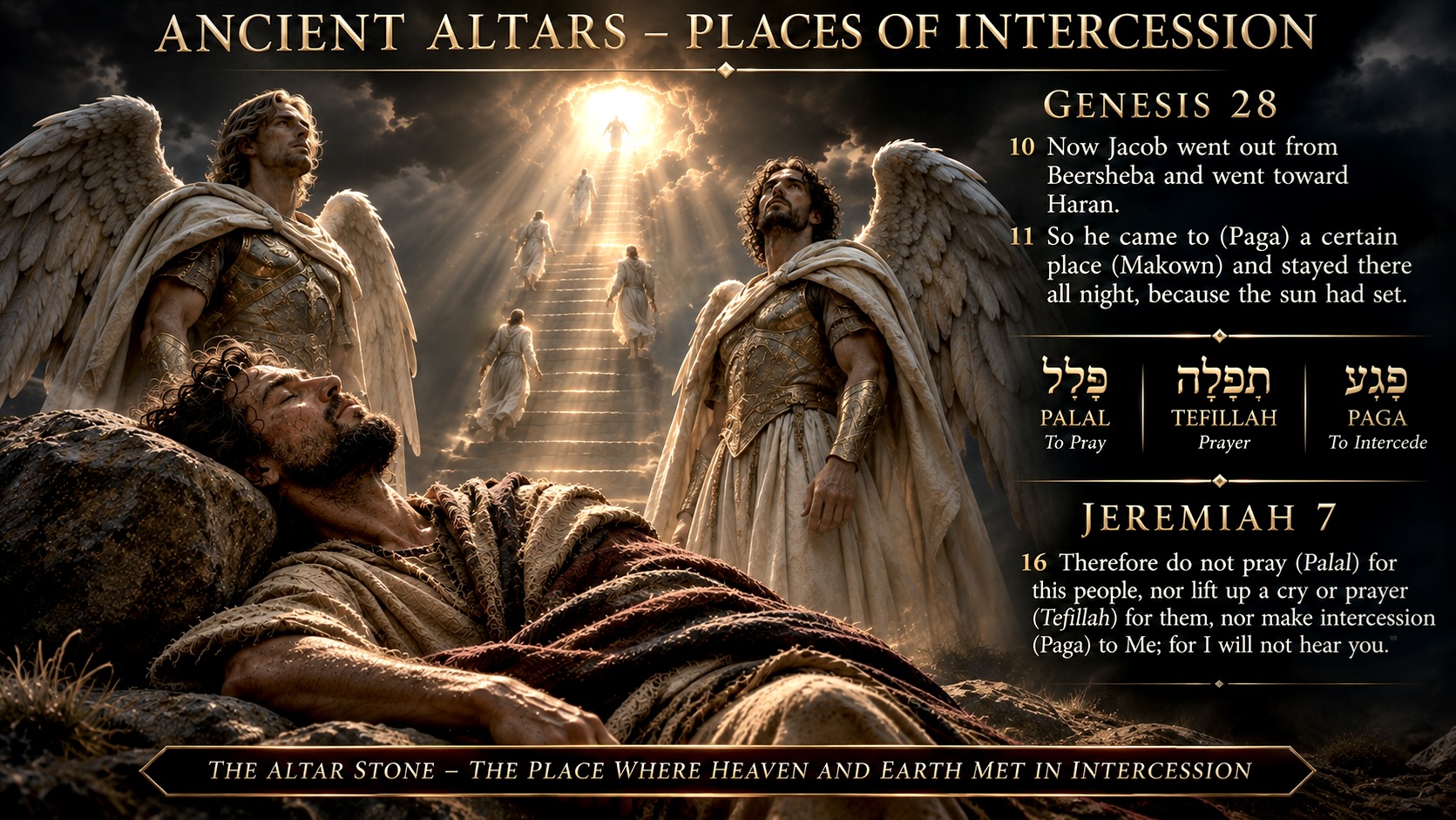
Then Jacob departed from Beersheba and went toward Haran. "So he came to a certain place and stayed there all night, because the sun had set. And he took one of the stones of that place and put it at his head, and he lay down in that place to sleep."
Genesis 28:10-11
The Paga Makom, Part One
On this Shabbat of Parashat Vayetzei, the fortieth day of this ninety-day journey into the fire of Jeremiah’s generation, something is happening around the world that is worth pausing to name: in Jewish synagogues from Jerusalem to New York to Johannesburg, in every congregation that follows the ancient Torah reading cycle, Genesis 28:10–15 is being read aloud before assembled congregations today—the story of Jacob, a stone, and a ladder.
I feel the prophetic urgency to declare that this Torah portion reading today is not a coincidence, but a proclamation. The Lord is speaking this passage into the earth in this very hour, pressing it into the consciousness of His people across every tradition and geography. The question before the whole watching world is whether we have ears to hear what the Spirit is saying to the generation that stands at the threshold of the third day.
The Torah portion draws us to one of the most consequential threshold moments in the entire biblical narrative: a tired man, a setting sun, a stone for a pillow, and two Hebrew words compressed into a single verse that contain between them the whole theology of intercession, encounter, and the appointed places of God. But before we press into Genesis 28:11 and the vocabulary of that night, we have to begin where the full weight of these words comes to rest, in a single breathtaking passage in the book of Jeremiah, because it is there that God himself reveals the full architecture of intercession by forbidding it.
THE THREE WORDS THAT CANNOT BE SILENCED
Scripture uses three primary Hebrew words for prayer and intercession, and in a single verse the Lord uses all three at once in a prohibition—not to show us exactly what prayer is, but to show how seriously heaven regards the intercessory office and how much it can accomplish. The verse is Jeremiah 7:16, and God speaks directly to the prophet: “Therefore do not pray (palal) for this people, nor lift up a cry or prayer (tefilla) for them, nor make intercession (paga) to Me; for I will not hear you.”
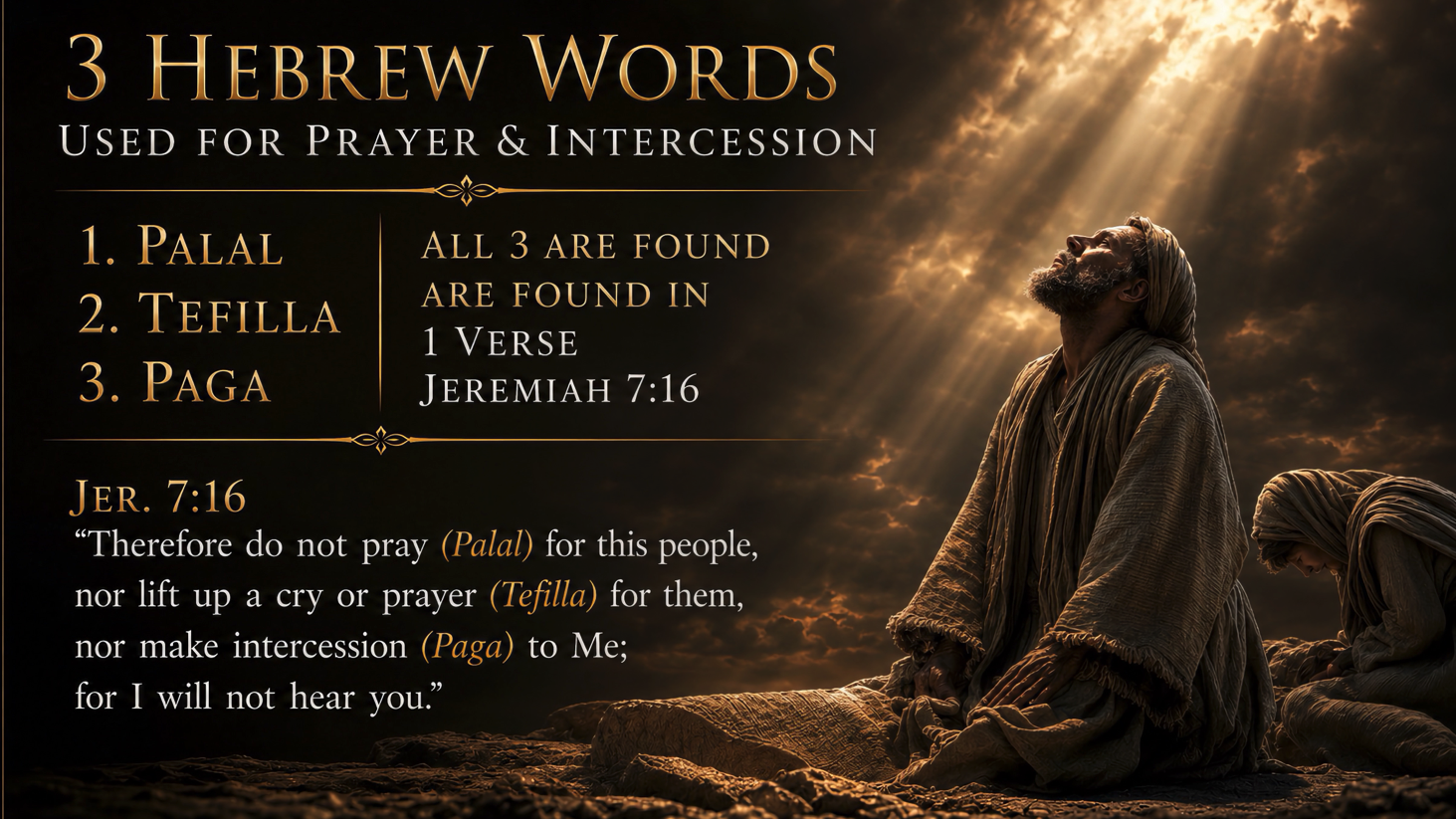
Jeremiah 7:16“Therefore do not pray (palal) for this people, nor lift up a cry or prayer (tefilla) for them, nor make intercession (paga) to Me; for I will not hear you.”
The first word, palal, carries the idea of intervention and arbitration, placing oneself between two parties as a mediator, judging the case, and interceding by standing in the gap between an accuser and the accused and presenting a counterplea.
The second, tefilla, is the great formal Hebrew word for prayer, the root behind the name of the psalms of petition and praise, and the word behind the central tradition of Jewish prayer that has echoed in synagogues and homes for thousands of years.
And the third, paga, is the word for the kind of prayer that moves through encounter, that falls upon its object in a spirit of deep entreaty, not merely voiced, but carried in the full weight of the intercessor’s presence and being. It arrives at a place or a person the way Jacob would arrive at Bethel before morning: exhausted, unexpectedly, and yet with the full force of a divine appointment.
The fact that God had to forbid all three is itself the revelation. Israel had not simply sinned—she had crossed a threshold of apostasy by refusing to repent of religious syncretism and allowing culture to shape the Kingdom instead of the Kingdom shaping the culture.
The LORD (Yahweh) used these three words to reveal the full arsenal of intercession, but the LORD refused to allow the prophet Jeremiah to employ the power of intercession on behalf of a people who refused to do Teshuvah (return to original intent). The LORD gave them over to what they wanted: Babylonian mixture, employed through generations of religious syncretism. Nothing could change the decision of Heaven’s court; God’s people would be given over to what they wanted—Babylon. This is the imagery of Romans 1:18–30, where the LORD comes three times, but the people refuse to repent, and God gives them over to the desires of their hearts.
The church is at a threshold of one of the greatest transitions in human history. God is raising up voices like Jeremiah’s, and hopefully we will listen to the Jeremiah generation of our day and repent of the religious syncretism we don’t think we need to repent of: the Greco-Roman Jesus. We’re currently being summoned to return to the true biblical Jesus (Yeshua) and His lifestyle, which is the blueprint pattern for the habitation of His Latter Glory.
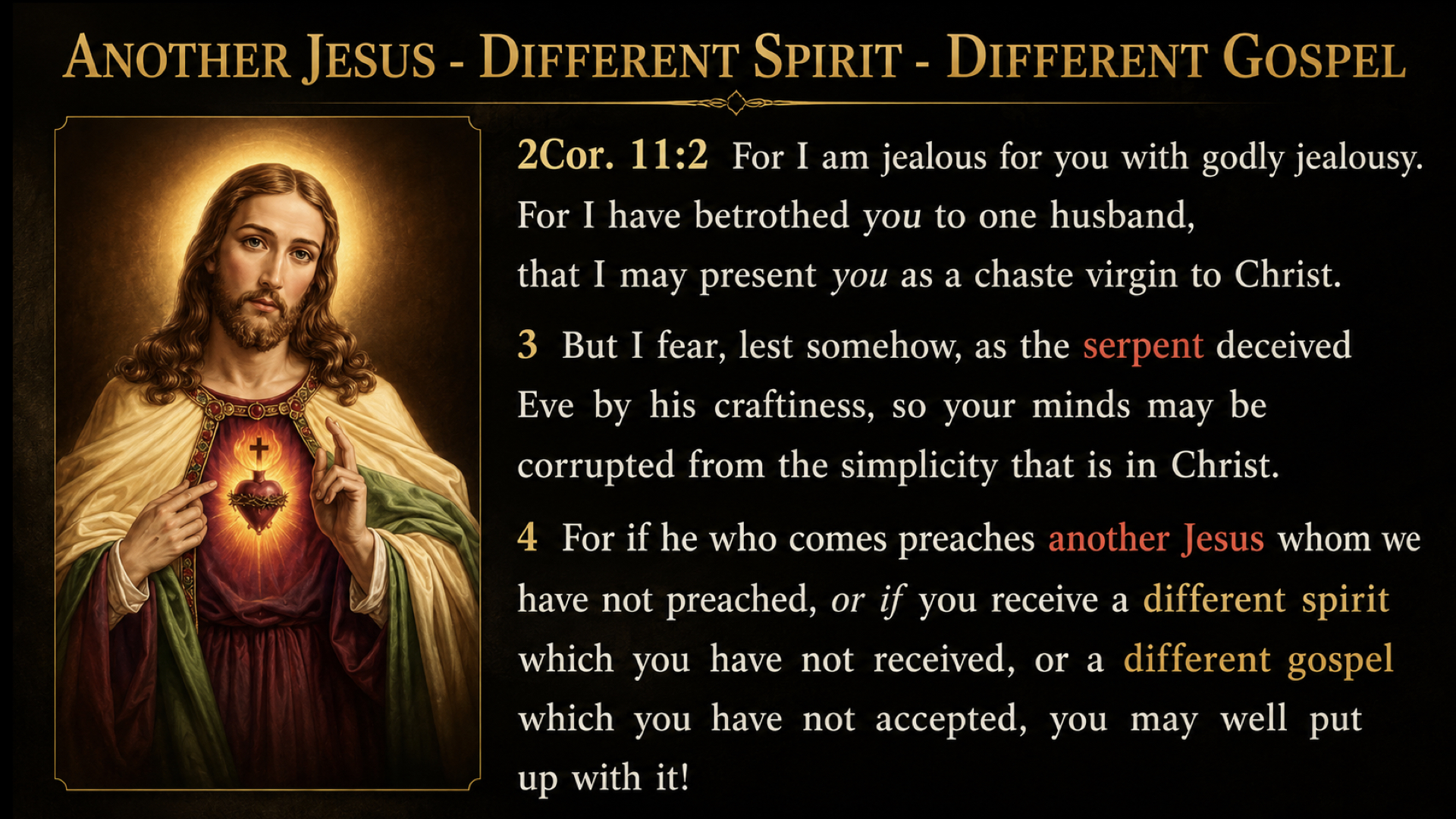
The leaders of Jeremiah’s day were very sincere, but sincerely wrong. We read about them and think they were all wicked men, but they were men and women just like us, whom centuries of religious syncretism had blinded to the truth of the original blueprint—the pattern that God revealed to his covenant people. God created his covenant people to be a light to the nations, but they kept wanting to be like the nations, and that was their downfall.
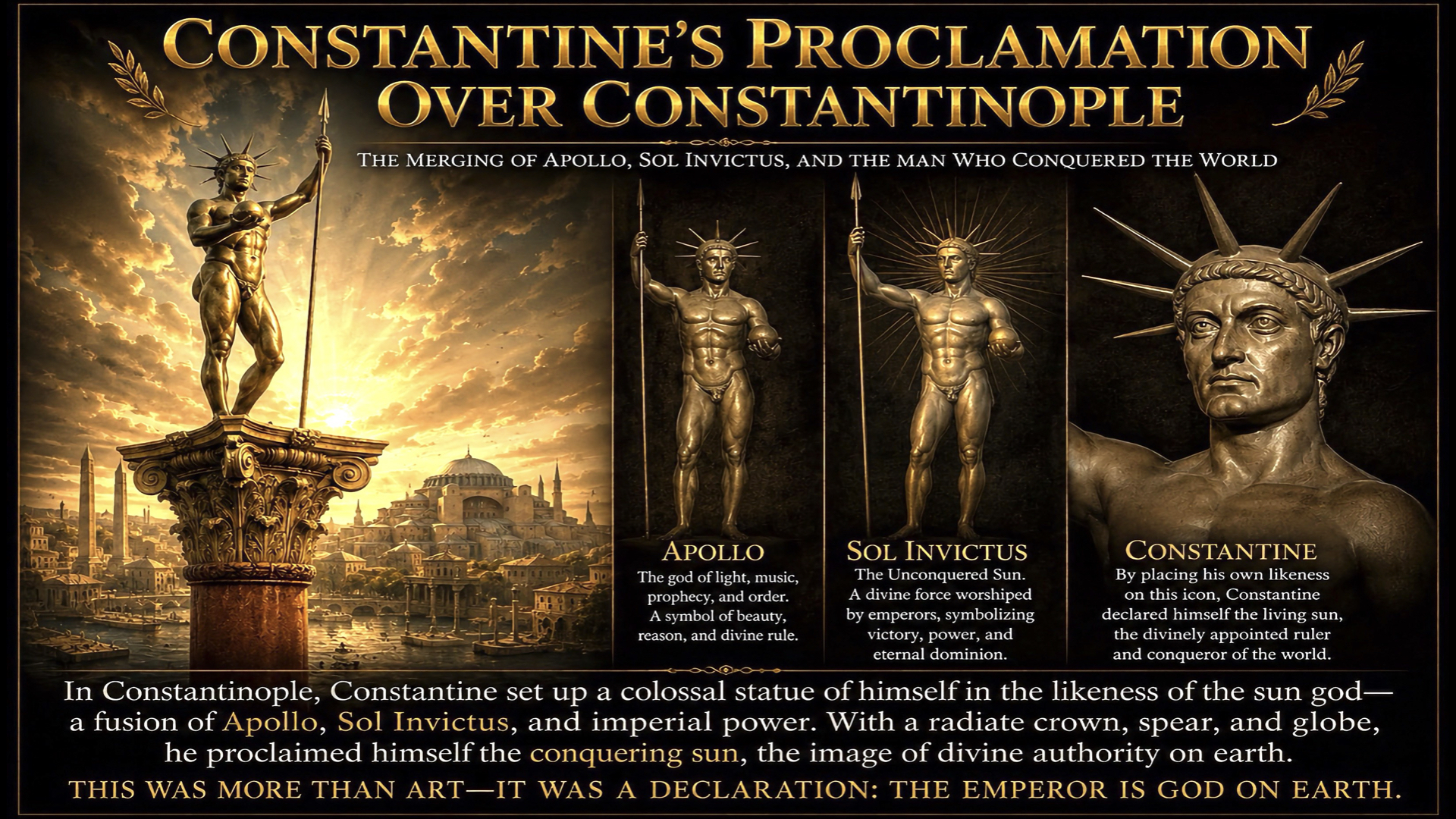
During Jeremiah’s day, the prophets kept prophesying dreams and visions, but those dreams and visions had been corrupted by centuries of religious syncretism. Yet one prophet, Jeremiah, stood in the council. This didn’t bring him great wealth or religious notoriety, but it brought him much trouble because the religious system that offered sacrifices and sang songs about Yahweh, and contended for revival did so on their own terms, not according to the original blueprint God gave His covenant people.
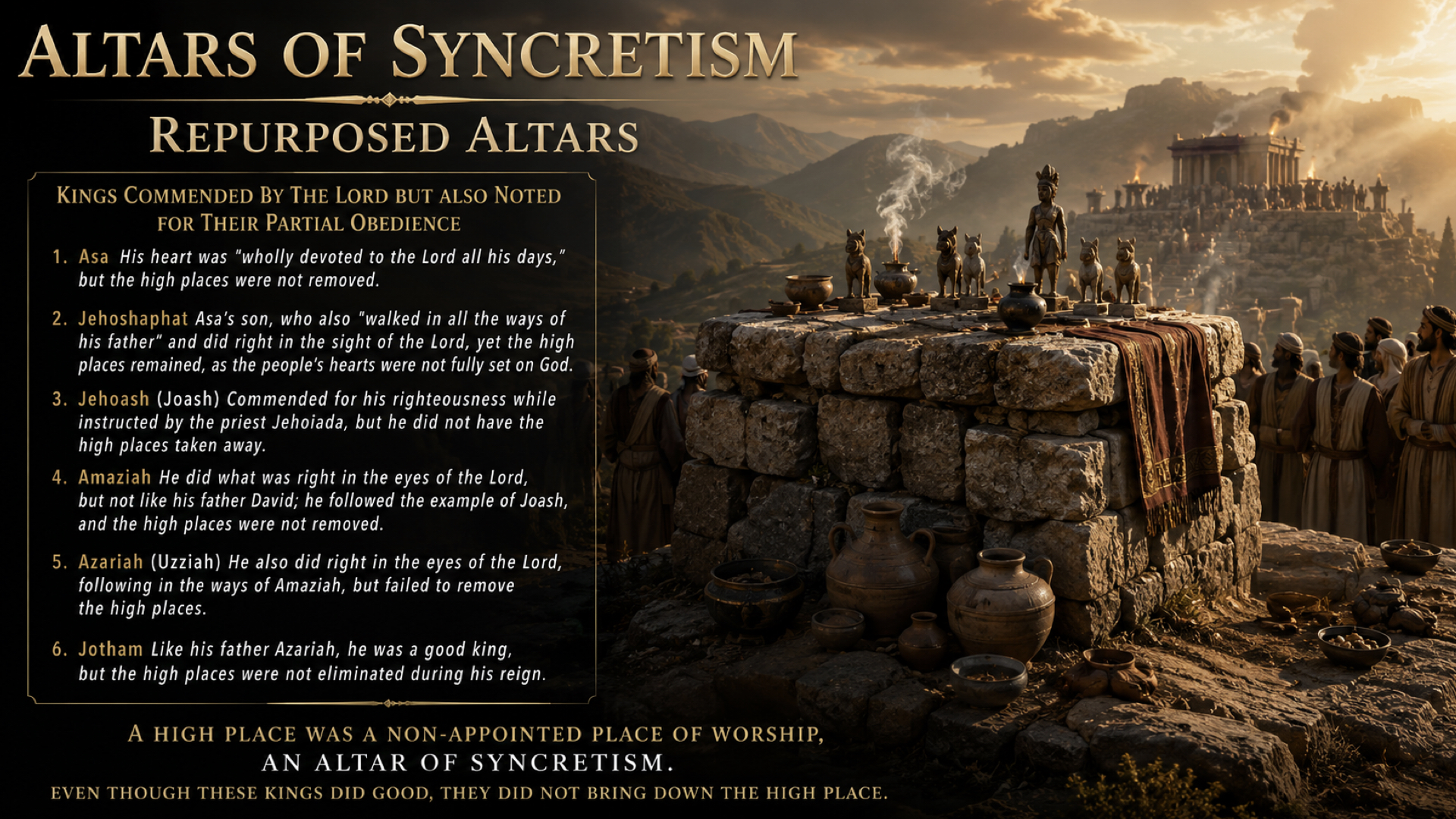
The leaders of the system refused to have a conversation about religious syncretism, which Yahweh absolutely forbade. They were commanded not to repurpose pagan altars in service to Yahweh, not because God is a dictator or proud, but because the seed and root of those altars go all the way back to the Tower of Babel rebellion and the seed of the Nephilim. Read Deuteronomy 12:1–4 and Exodus 34:11–14:
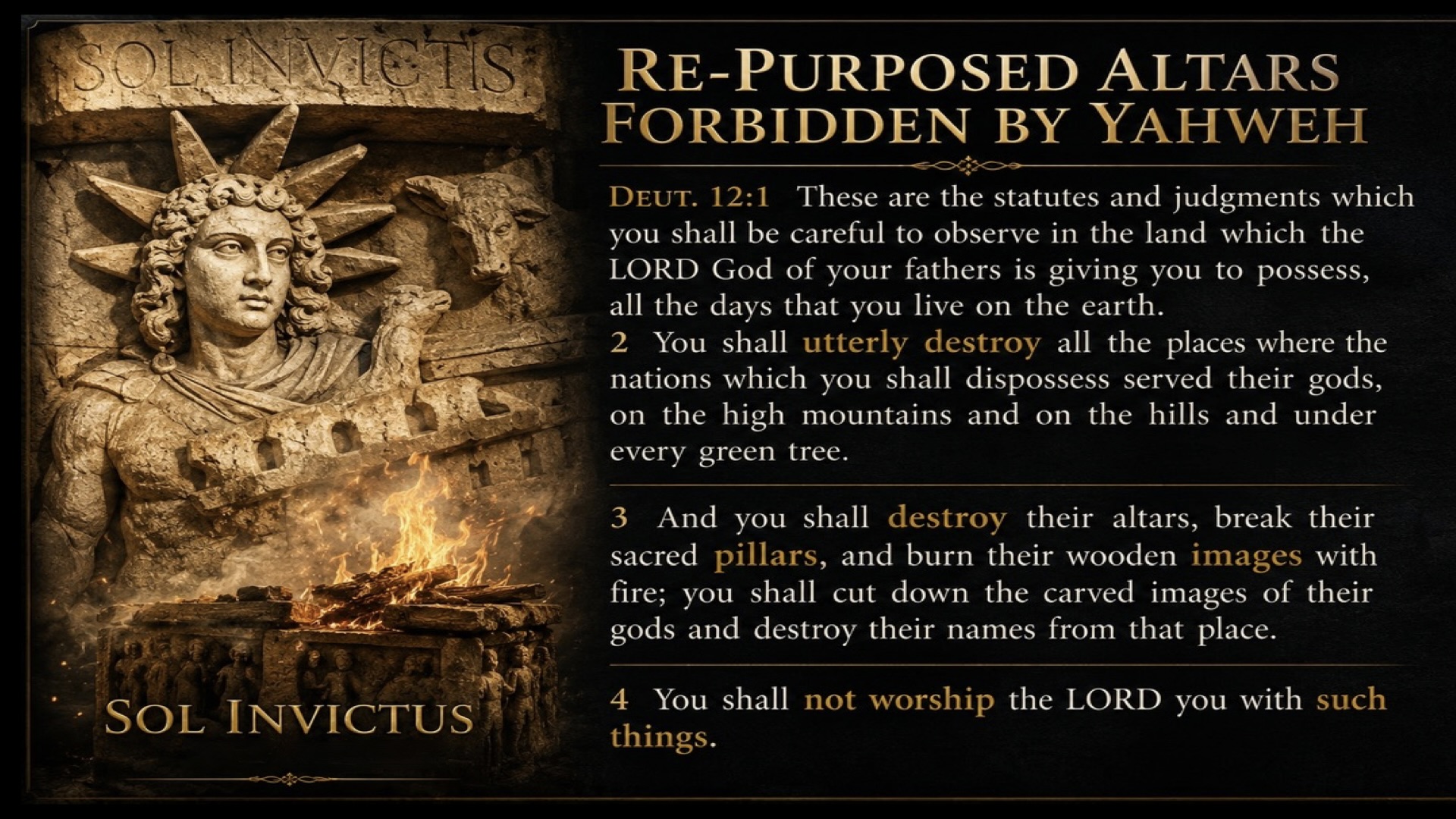
Deuteronomy 12:1–4 “These are the statutes and judgments which you shall be careful to observe in the land which the LORD God of your fathers is giving you to possess, all the days that you live on the earth. You shall utterly destroy all the places where the nations which you shall dispossess served their gods, on the high mountains and on the hills and under every green tree. And you shall destroy their altars, break their sacred pillars, and burn their wooden images with fire; you shall cut down the carved images of their gods and destroy their names from that place. You shall not worship the LORD your God with such things.”
Exodus 34:11–14 “Observe what I command you this day. Behold, I am driving out from before you the Amorite and the Canaanite and the Hittite and the Perizzite and the Hivite and the Jebusite. Take heed to yourself, lest you make a covenant with the inhabitants of the land where you are going, lest it be a snare in your midst. But you shall destroy their altars, break their sacred pillars, and cut down their wooden images (for you shall worship no other god, for the LORD, whose name is Jealous, is a jealous God).”
Jeremiah’s obedience in speaking the word of the Lord did not earn him favor with man, but it did earn him favor with God. It gave him access to the council of the Lord, a place before the throne of the Ancient of Days that no devil could kill, steal, nor destroy.
Jeremiah 7:16 highlights the power of the Kingdom of God released through prophetic intercession from a pure vessel—a kind of prayer that God forbade Jeremiah from engaging in on behalf of the people. This speaks to the depth of its power. God had to name all three words in a single command because all three were real, all three were active, and all three carried the authority to move heaven on behalf of a people. In this hour, with this generation, in this season, the LORD of hosts is not forbidding them. He is summoning them.
HE LIGHTED UPON THE PLACE
The Hebrew behind “he came to a certain place” in Genesis 28:11 gives us two words that no English translation can fully carry. The King James Version comes closest when it renders the phrase “he lighted upon a certain place” because that phrase—“lighted upon”—reaches for something the modern versions flatten into ordinary travel language—and what Jacob did that night was anything but ordinary.
The first word is paga, and once you understand what it means, you can never read this passage the same way again. Paga is one of the three primary Hebrew words Scripture uses for intercession. It means to encounter, to entreat, to pray, to fall upon, to make intercession—and it appears at some of the most pivotal moments in the entire Bible. It is the word behind Isaiah 59:16, where the LORD surveys the earth and grieves that there was no intercessor standing in the gap. And it is the word behind the climactic declaration of Isaiah 53:12, the description of the suffering Servant of God who “bore the sin of many, and made intercession for the transgressors”—the paga of the Messiah at the cross, where arrival and intercession became the same act, where the One who came into this world to encounter us became, in that encounter, the intercessor who would not let us go.
Isaiah 53:12“ He was numbered with the transgressors, and He bore the sin of many, and made intercession for the transgressors.”
But the word carries one more dimension that this generation needs to understand: in Scripture, paga also describes breaking through upon an enemy—falling upon what has been erected against the purposes of God with the force of a divine mandate. The same Hebrew root that means to intercede also means to break through, to fall upon what stands in opposition. The intercessor who truly paga’s is not merely someone who bows in prayer; he is someone who acts upon the revelation received in the place of encounter to break through what the enemy has fortified. This is breakthrough intercession—prayer that does not stop at the threshold of the problem but falls upon it, that arrives at the appointed place and refuses to leave until something is broken and something is opened. When you understand this, you read the whole story of David in a different light, and we will come back to him tomorrow.
When Jacob paga upon the place, the Hebrew is not describing a tired traveler stumbling onto a convenient campsite. The language of the text reaches into the same language as Isaiah 53 and Jeremiah 7—the language of intercession, of an encounter that carries priestly weight. His arrival at this location was itself a form of prayer. The mere fact of his exhausted body settling at this site, without an altar yet built, without a vow yet made, without a word spoken into the desert night, was already a priestly act in the language of heaven—a paga, a falling upon the place in the full weight of what that word means, the third of the three great intercession words, moving through the landscape of Canaan in the person of a man who did not yet know he was an intercessor.
THE MAKOM – THE APPOINTED PLACE
The second word is makom—the Hebrew word for “place.” But what strikes you when you read Genesis 28:11 carefully is that the word appears three times in a single verse: he came to the place, he took stones from that place, and he lay down in that place. Three times. The repetition is not accidental; it is the text insisting that the place itself matters, that something has been embedded in this geography that Jacob’s natural senses cannot yet detect but that the Spirit of God is pressing us not to overlook.
The rabbinical sages were so struck by the theological weight this word accumulates across Scripture that they employed it as one of the names of God himself: HaMakom, “the Place.” The Midrash declares that he is the dwelling place of the world, but the world is not his dwelling place—meaning the universe is contained within God’s presence rather than the other way around. The word makom had stretched until it became a container for the divine presence itself, a name for the One who is the ultimate context for all existence. When Jacob arrived at the makom, he was arriving, without knowing it yet, at the place where HaMakom dwelt.
We have encountered this word before, in Genesis 22:4, in what I believe is the most theologically layered moment in all the patriarchal narratives. Abraham, on the third day of his journey toward the altar, “lifted his eyes and saw the place (hamakom) afar off.” He did not see a mountain range, a geographical feature, or a recognizable landmark. He saw the place—the makom—the site God had appointed from before the foundation of the earth for the shedding of blood, for the encounter between divine instruction and human obedience, and for the revelation that the LORD himself would provide the sacrifice.
The rabbinical tradition, virtually without dissent, identifies the makom of Abraham’s binding of Isaac as Mount Moriah, the future Temple Mount. And when Jacob lays his head on the stones of Genesis 28, the same question presses upon us: Is this the same makom? The debate among Jewish commentators and Christian scholars about whether Jacob’s Beth-El is identifiable with Abraham’s Moriah remains a mystery—the geography is genuinely complex, and honest interpreters have disagreed for centuries. But what is undeniable is the word picture: the makom has continuity across generations, a divine appointment that travels through time like a single thread running through the whole garment of redemptive history, surfacing at key moments in the lives of the patriarchs, surfacing again at Sinai, surfacing at the threshing floor of Ornan the Jebusite, and surfacing at Golgotha.
ABRAHAM’S THIRD-DAY SIGHT
When Abraham saw the (makom) place on the third day of his journey, the Hebrew behind that moment is worth pressing into, because it reaches directly into the threshold we ourselves are standing upon in this hour. The word translated “lifted his eyes” is nasa, which carries the sense of a raising, an elevation, a carrying upward—and the word for “afar off” is rachowq, meaning at a distance, something seen from a vantage point that the natural eye would not ordinarily reach. This is a Hebrew idiom for being given to see what your present circumstances would not normally make visible: Abraham could suddenly perceive what two full days of walking had not shown him, because on the third day God opened his eyes to see the makom.
Genesis 22:4“ Then on the third day Abraham lifted his eyes and saw the place afar off.”
The ancient rabbis understood Abraham’s third-day sight as a gift of the Spirit, a prophetic glimpse across time and geography into the place God had prepared. And we have to press into the significance of which day this was, because the third day in the Hebraic framework of redemptive history is not merely a biographical detail about Abraham’s journey—it is a calendrical and prophetic category that runs through all of Scripture and speaks with stunning precision to the generation we are living in. The apostle Peter declares that, with the Lord, one day is as a thousand years and a thousand years as one day, which means the Hebraic understanding of seven days as seven millennia gives us a framework for locating ourselves on the map of redemptive time. From the cross of Jesus, which we can date to approximately 29 AD, the first millennium from the cross carries us to around 1029 AD, and the second millennium brings us to approximately 2029 AD. That is to say, the second day from the cross is ending, and we are standing at the threshold of the third millennium—the third day from the cross, which is the day of resurrection, the day when what was planted in death begins to emerge into glory, and the day when God opens the eyes of his people to see what previous generations could not see.
We are standing where Abraham stood on the morning of the third day, our eyes lifted by the Spirit—the same lifting (nasa), the same ability (rachowq) to see afar off, to the (makom) place. The Lord is lifting the eyes of this generation spiritually to see the appointed places that God has embedded in the landscape of the earth from before the foundation of the world: the places of intercession (paga makom), where heaven and earth were always meant to meet, where the ladder of the LORD was always meant to be planted, where the prayers of the saints were always meant to rise, and where the mandates of heaven were always meant to descend.
The forty-day threshold and the third-day threshold converge at this exact moment, and the convergence is not accidental.
Tomorrow we will press deeper—into the altars where heaven and earth have always met, into the stone beneath Jacob’s head that Paul identified as the Rock of Messiah, and into what David understood when he carried the head of a giant to a city he did not yet possess. For now, the makom is calling. The LORD has been in this place all along, and there is a generation just now beginning to know it.
DECLARATION
I declare that there is a Paga Makom over my region, marked and appointed by God from before the foundation of the earth, and that no generation of enemy occupation can permanently erase what God has embedded in those gates. I declare that my arrival at the appointed place—the makom God has called me to stand and intercede—is itself an act of prayer, a paga, an encounter that heaven has already recognized. I declare that this is the third-day threshold, that my eyes are being lifted by the Spirit to see the places afar off that previous generations could not see, that the fire from the heavenly altar is being hurled to the earth in answer to the ascending prayers of the saints, and that I am called to be a living altar—a place where heaven addresses earth.
PRAYER
Lord, teach me the paga—what it means for my very arrival at the place You have chosen to be an act of intercession, to carry the weight of a covenant prayer not just in my words but in my feet and my presence and my willingness to lay my head on the altar stones You have prepared. Give me Abraham’s third-day sight: the nasa to lift my eyes, the rachowq to see the makom afar off, to perceive in this hour of the third-day threshold the appointed places you have designated for covenant breakthrough in my region. And let the prayers that ascend from those places carry the weight of all three words—the palal, the tefilla, the paga—until the fire from the heavenly altar answers and the blueprints come down.
QUESTION
What is the Paga Makom—the appointed gate, the designated altar of encounter—that God has called you to discern in your city or region? And when you ask the Father, “What were you thinking when you created this land?”—what do you hear?